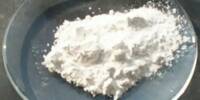
Cadmium hydride (systematically named cadmium dihydride) is an inorganic compound with the chemical formula (CdH2)n (also written as ([CdH2])n or CdH2). It is a solid, known only as a thermally unstable, insoluble white powder. It is one of the least stable metal hydrides and is mostly known from laboratory studies rather than practical use.
It is a highly unstable metal hydride known mostly from laboratory research. Its weak Cd–H bonding and cadmium’s toxicity limit any practical use. It is notable as a rare example of a Group 12 metal hydride and is important primarily for theoretical and structural studies in inorganic chemistry.
Properties
- Chemical formula: CdH2
- Molar mass: 113.419 g mol−1
- Appearance: White solid (unstable)
- Density: Not well established due to instability
- Melting point: Decomposes before melting
- Solubility: Reacts with water
- Stability: Decomposes readily into Cd + H₂
Nomenclature
The systematic name cadmium dihydride, a valid IUPAC name, is constructed according to the compositional nomenclature. Cadmium dihydride is also used to refer to the related molecular compound dihydridocadmium and its oligomers. Care should be taken to avoid confusing the two compounds.
Cadmium hydride is also used as a compositional IUPAC name for the compound with the chemical formula CdH.
Chemical properties
Solid cadmium hydride, on the basis of its infrared spectrum, is believed to contain hydrogen-bridge bonds.[3] Other lower metal hydrides polymerize in a similar fashion. Unless cooled below −20 °C (−4 °F), cadmium hydride rapidly decomposes to produce cadmium and hydrogen:
(CdH2)n → n Cd + n H2
Preparation
Cadmium hydride cannot be prepared by simple direct combination of Cd metal and hydrogen gas (unlike some metal hydrides).
Typical preparation methods involve:
(a) Reaction of cadmium halides with hydride donors
For example: CdCl₂ + 2 LiH → CdH₂ + 2 LiCl
(b) Gas-phase formation at very low temperatures
- Cadmium vapour + hydrogen gas → CdH₂ (under extreme conditions)
- Product decomposes when warmed
Due to its instability, CdH₂ is often detected spectroscopically rather than isolated.
Stability and Handling
- Extremely unstable, decomposing spontaneously at room temperature.
- Must be handled at very low temperatures or in inert atmospheres (argon, helium).
- Due to cadmium’s toxicity, handling CdH₂ involves strict safety measures.
Uses
- Cadmium hydride has no commercial applications because of its instability and cadmium’s toxicity.
- It is mainly used in:
- Research about metal–hydrogen bonding
- Theoretical studies in inorganic chemistry
- Spectroscopy of transient hydride species