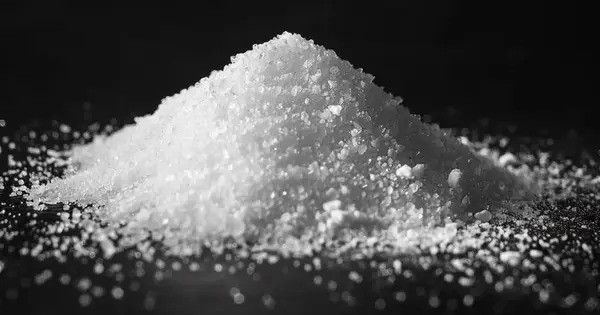
Lithium selenide is an inorganic compound that formed by selenium and lithium. It is a selenide with a chemical formula Li2Se. It is a highly reactive, moisture-sensitive inorganic compound important for advanced battery research, semiconductor synthesis, and optical materials. While valuable in high-tech applications, it must be handled with strict safety due to its potential to generate toxic hydrogen selenide gas.
Properties
- Chemical formula: Li2Se
- Molar mass: 92.842
- Appearance: clear crystal
- Density: 2.0 g/cm3
- Melting point: 1,302 °C (2,376 °F; 1,575 K)
- Solubility in water: hydrolysis
Synthesis
Lithium Selenide can be synthesized via the reaction between 1.0 equivalents of grey elemental selenium and 2.1 equivalents of lithium trialkylborohydride. The reaction takes place in a solution of THF (tetrahydrofuran) under with stirring (minimum of 20 minutes) at room temperature according to the reaction below: To increase yields and harmful byproducts, naphthalene can be added to the reaction as a catalyst.
Se + 2Li(C2H5)3BH → Li2Se + 2(C2H5)3B + H2
Another method of synthesis involves the reduction of selenium with lithium in liquid ammonia. The Li2Se can be extracted after evaporation of the ammonia.
Occurrence and Production
Lithium selenide does not occur naturally because of its extreme reactivity with oxygen and moisture.
Artificial Production
Usually synthesized in laboratory or industrial conditions:
Direct reaction: 2Li+Se→Li2Se
Performed at elevated temperatures in inert atmosphere.
Lithium hydride + selenium: 2LiH+Se→Li2Se+H2
Lithium carbonate reduction with selenium in controlled conditions.
Uses
One of the most contemporary uses of Li2Se compounds is in the creation of high-density capacitors and batteries. Lithium selenide can act as an excellent prelithiation agent, which helps to prevent the loss of capacity and efficiency during the formation of the solid electrolyte interphase (SEI).
Although not very common, Li₂Se is relevant in advanced materials research:
a) Solid-state batteries
Used as a component in solid electrolytes
Helps improve ionic conductivity in lithium–selenium battery systems
b) Semiconductor research
Lithium–selenium compounds are studied for optoelectronic behavior
Not widely commercial but promising in experimental devices
c) Precursor materials
Used in synthesis of metal selenides and other advanced inorganic compounds
Safety Considerations
- H₂Se gas is extremely toxic and corrosive
- Must be handled under dry, inert atmosphere
- Proper lab safety equipment is essential (glove box, fume hood)