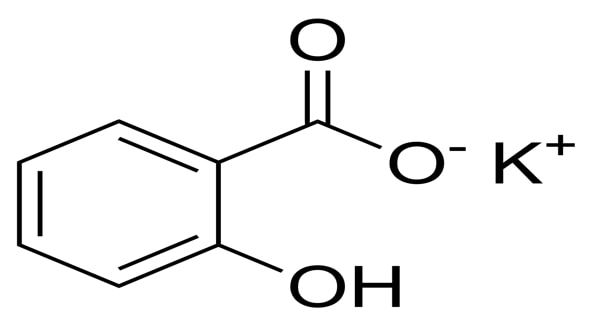
Potassium salicylate is the potassium salt of salicylic acid. It exists as the monohydrate KC7H5O3·H2O below 29 °C (84 °F), where it decomposes to the anhydrous form (KC7H5O3).It appears as a white, crystalline, water-soluble substance. Pharmacologically, it has analgesic, antipyretic, and anti-inflammatory properties, similar to other salicylates. Historically, it has been used to relieve pain, fever, and inflammatory conditions such as rheumatism, though its medical use is now limited due to safer alternatives.
Potassium salicylate works mainly by inhibiting prostaglandin synthesis, thereby reducing inflammation and pain. It has also been used in some topical preparations and in laboratory or chemical applications. Like other salicylates, excessive use may cause gastrointestinal irritation, tinnitus, or salicylate toxicity. It should be used cautiously in individuals with salicylate sensitivity, peptic ulcers, or kidney disorders.
Properties
- Chemical formula: C7H5KO3
- Molar mass: 194.227 g/mol (monohydrate), 176.212 g/mol (anhydrous)
- Melting point: 29 °C (84 °F) (monohydrate, decomposes)
- Solubility in water: 18.07 mol % @ 100 °C (212 °F)
- Appearance: White to off-white crystalline powder
- Odor: Odorless
- Taste: Slightly bitter
- Solubility: Highly soluble in water, Slightly soluble in alcohol
Occurrences
Potassium salicylate is a potassium salt of salicylic acid that occurs mainly as a manufactured compound rather than a naturally abundant substance, though its parent salicylates originate from plants such as willow bark and meadowsweet. It is highly soluble in water, which makes it useful in situations where salicylic acid itself would be too poorly soluble.
Applications
Potassium salicylate is used in pharmaceutical and cosmetic formulations for its anti-inflammatory, analgesic, and keratolytic properties, particularly in topical products for skin conditions like acne, psoriasis, and dandruff. It has also been employed in some medical preparations as an alternative salicylate for patients requiring soluble forms, and in laboratory and industrial contexts as a buffering or complexing agent.