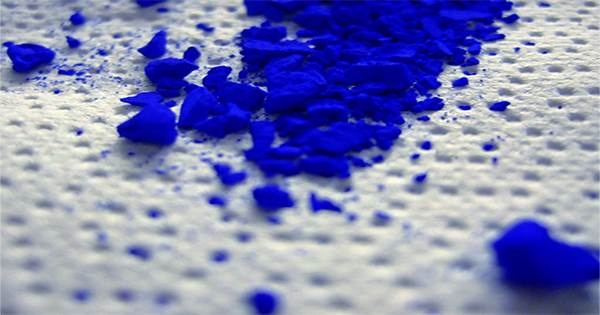
Neodymium(II) sulfide is a binary inorganic chemical compound of Neodymium metal and sulfur with the chemical formula NdS. It composed of neodymium and sulfur, where neodymium is in the +2 oxidation state. It appears as a dark brown to black crystalline solid and is a member of the lanthanide sulfide family. NdS typically crystallizes in a rock-salt (NaCl-type) structure, which gives it high thermal stability and characteristic metallic or semiconducting behavior.
NdS is of scientific interest in the study of rare-earth chalcogenides for potential applications in thermoelectric materials, semiconductors, and high-temperature ceramics. It is generally stable in inert or reducing atmospheres but oxidizes readily when exposed to air, forming oxysulfides or neodymium oxide. While not widely used commercially, it is valuable in research exploring lanthanide sulfide compounds and their roles in advanced electronic and optical materials.
Properties
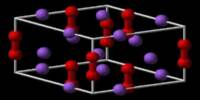
Neodymium monosulfide forms crystals of the cubic system, space group Fm3m, cell parameter a = 0.5691 nm, Z = 4. This compound is insoluble in water but can react with acids to produce hydrogen sulfide gas. It is synthesized mainly by the direct combination of neodymium metal with sulfur at high temperatures or through the reduction of neodymium(III) sulfide (Nd₂S₃). Due to its stoichiometry and bonding, neodymium(II) sulfide exhibits interesting magnetic and electrical properties associated with the unpaired 4f electrons of neodymium.
- Chemical formula: NdS
- Molar mass: 176.30 g·mol−1
- Appearance: crystals
- Density: 6.15 g/cm3
- Melting point: 2,200 °C (3,990 °F; 2,470 K)
It is typically a dark-colored crystalline solid with a high melting point. NdS crystallizes in a structure similar to that of other rare-earth monosulfides, often adopting a rock-salt (NaCl-type) lattice. The compound exhibits semiconducting behavior due to its partially filled 4f electron shell, giving it interesting electrical and magnetic properties. It is insoluble in water and stable in dry air but can slowly oxidize when exposed to moisture, forming oxysulfide or sulfate compounds.
Synthesis
Fusion of stoichiometric amounts of pure substances:
Nd + S → NdS
Occurrences
Neodymium(II) sulfide does not occur naturally; it is synthesized in laboratories. It is usually prepared by direct reaction of neodymium metal with sulfur or hydrogen sulfide gas at elevated temperatures. NdS and related rare-earth sulfides are studied for potential use in high-temperature thermoelectric materials, infrared detectors, and advanced ceramics due to their stability and electronic characteristics.