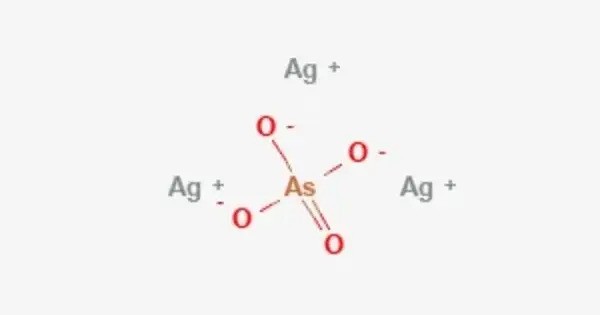
Silver arsenate is an inorganic compound with the formula Ag3AsO4. It is known for its oxidizing and toxic properties, largely due to the presence of arsenic. It is photosensitive and can darken upon exposure to light, a common trait among silver compounds. This material is generally handled with care because both silver and arsenic compounds can pose environmental and health hazards. It has been used in qualitative analysis to distinguish between phosphate (Ag3PO4 is yellow) and arsenate(V) solutions.
In laboratory settings, silver arsenate can be synthesized by the precipitation reaction between silver nitrate (AgNO₃) and a soluble arsenate salt, such as sodium arsenate (Na₃AsO₄). Due to its toxicity and instability, it has limited industrial use. It is primarily used in chemical research for studying precipitation reactions and analytical chemistry as a reagent. It also serves as a reference material in certain photochemical and catalytic studies involving silver compounds.
Properties
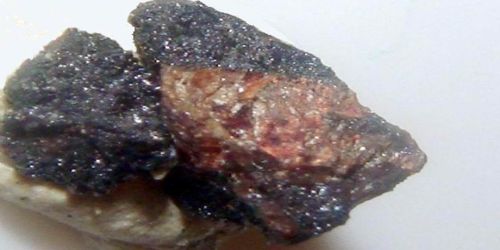
It appears as a yellow to reddish-brown crystalline solid, typically insoluble in water but soluble in acids such as nitric acid. The compound has a molar mass of 463.53 g/mol and a density of around 5.7 g/cm³. It decomposes upon heating, releasing toxic arsenic oxides and silver oxides.
- Chemical formula: Ag3AsO4
- Molar mass: 462.52 g/mol
- Appearance: brown powder/lumps
- Density: 6.657 g/cm3
- Melting point: 830 °C (1,530 °F; 1,100 K) (decomposes)
- Solubility in water: 0.64 mg/L
Occurrences
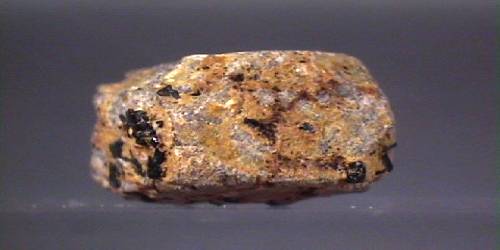
Silver arsenate is rarely found in nature as a mineral form but may occur in oxidized zones of arsenic-rich silver ores. It can form as a secondary mineral due to reactions between silver compounds and arsenate-bearing solutions.
Applications
Applications of silver arsenate are limited due to its toxicity, but it has been studied in analytical chemistry, electrochemistry, and as a pigment in certain specialized materials. It is also of interest in research related to arsenic compound stability and silver-based photocatalysts. Proper disposal and handling are essential due to its hazardous nature.