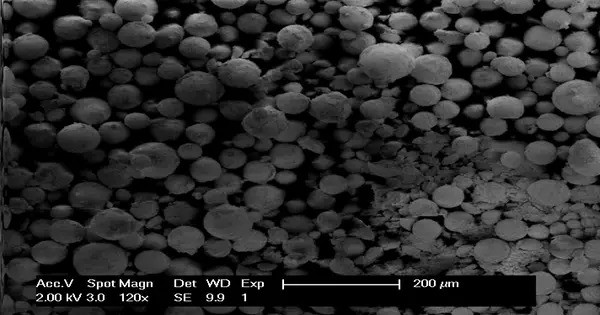
Neodymium nickelate is a nickelate of neodymium with a chemical formula NdNiO3. In this compound, the neodymium atom is in the +3 oxidation state. It is a member of the rare-earth nickelate family RNiO₃ (R = rare-earth element). These materials are widely studied in condensed-matter physics, oxide electronics, neuromorphic devices, and catalysis because they exhibit rich electronic, magnetic, and structural phenomena—especially a famous metal-to-insulator transition (MIT).
Preparation
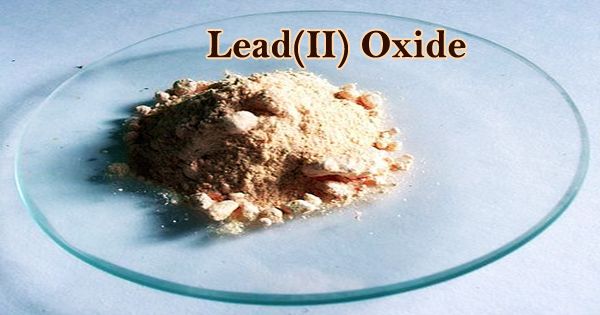
Neodymium nickelate can be prepared by dissolving neodymium(III) oxide and nickel(II) oxide in nitric acid, followed by heating the mixture in an oxygen atmosphere.
It can also be prepared by pyrolyzing a mixture of nickel nitrate and neodymium nitrate.
It decomposes in high temperature (950 °C) by nitrogen:
4 NdNiO3 → 2 Nd2NiO4 + 2 NiO + O2
It can also be reduced to the monovalent nickel compound NdNiO2 by sodium hydride at 160 °C.
Physical properties
Neodymium nickelate shows metal-insulator transition (MIT) under low temperature. The temperature at which it transforms (TMIT) is 200K, which is higher than praseodymium nickelate (130K) but lower than samarium nickelate (400K). It transforms from antiferromagnetism to paramagnetism.
- Chemical formula: NdNiO3
- Molar mass: 250.932 g·mol−1
Electronic Properties
- Exhibits correlated electron behavior.
- Ni ions change electronic configuration during the MIT.
- Strong coupling among charge, spin, and lattice degrees of freedom.
Magnetic Properties
- Below the MIT, NdNiO₃ becomes antiferromagnetic.
- Shows E′-type antiferromagnetic ordering around ~200 K.
Optical Properties
- Reflectance and optical conductivity change across the MIT.
- Useful for optical sensing, infrared devices, and smart coatings.
Occurrences
Neodymium nickelate is not naturally occurring in geological deposits. It is a synthetic compound produced in laboratories for research and technological applications.
How It Is Produced
- Solid-state synthesis: Heating Nd₂O₃ and NiO at high temperatures in oxygen-rich conditions.
- Sol–gel or wet-chemical methods: For improved homogeneity.
- Pulsed laser deposition (PLD) or molecular beam epitaxy (MBE): Used to create thin films with controlled strain and thickness.
Uses
In a 2010 study, it was found that neodymium nickelate as an anode material provided 1.7 times the current density of typical LSM anodes when integrated into a commercial SOEC and operated at 700 °C, and approximately 4 times the current density when operated at 800 °C.
Though largely experimental, NdNiO₃ is promising for:
- Resistive switching devices
- Neuromorphic computing materials
- Temperature or strain sensors
- Smart windows and optical devices
- Catalysis and oxygen evolution reactions