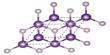
Gadolinium oxysulfide (Gd2O2S), also called gadolinium sulfoxylate, GOS or Gadox, is an inorganic compound, a mixed oxide-sulfide of gadolinium. It is an inorganic compound consisting of gadolinium, oxygen, and sulfur. It is commonly abbreviated as GOS or Gadox and serves as a mixed oxide-sulfide material with significant applications in luminescence and imaging technologies.
It is a promising luminescent host material due to its high density and the high effective atomic number of gadolinium, which enhances its interaction with X-ray radiation.
Properties
Gadolinium oxysulfide appears as a white, odorless powder with a density of 7.32 g/cm³. It is insoluble in water and exhibits high thermal and chemical stability, with low phonon energy around 300–600 cm⁻¹. Optically, it is known for its luminescent properties, including down-conversion (DC) and up-conversion (UC) luminescence when doped with lanthanides like Eu (red emission at ~613–622 nm), Tb (green at 545 nm), or Yb/Er (NIR-excited visible light).
- Chemical formula: Gd2O2S
- Molar mass: 378.5638 g/mol
- Appearance: white odorless powder
- Density: 7.32 g/cm3, powder
- Solubility in water: insoluble
Synthesis Methods
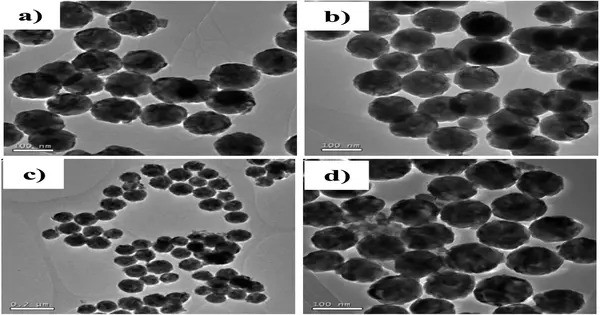
Several methods are used to synthesize Gd₂O₂S particles, broadly categorized into single-step and multi-step processes. Common techniques include solid-state reaction (high-temperature annealing of precursors), reduction methods, combustion synthesis, emulsion liquid membrane, and gas sulfuration. For nanoparticles, sulfidation of gadolinium hydroxides, hydroxycarbonates, or oxides under sulfur atmosphere (e.g., at 900°C) is prevalent, preserving morphology and avoiding organic contaminants.
Uses
The main use of gadolinium oxysulfide is in ceramic scintillators. Scintillators are used in radiation detectors for medical diagnostics. The scintillator is the primary radiation sensor that emits light when struck by high energy photons.
Safety and Toxicity
Gadolinium oxysulfide is classified as hazardous under GHS, with warnings for harm if swallowed (H302), in contact with skin (H312), or inhaled (H332); it may cause skin irritation (H315), serious eye irritation (H319), and respiratory irritation (H335). Protective measures include wearing respirators for dust exposure, gloves to prevent dermatitis, and storing away from acids (which can produce toxic hydrogen sulfide) or oxidizers. Inhalation may lead to lung or liver damage.