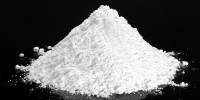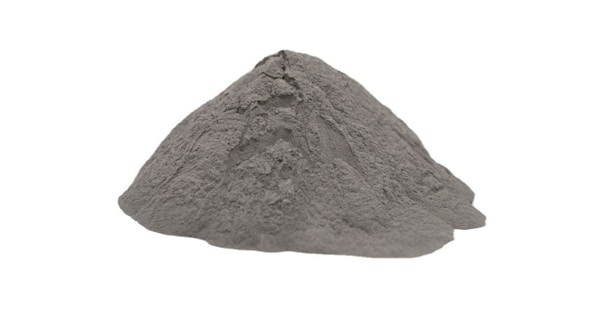
Tantalum boride (TaBₓ) refers to a family of compounds formed between tantalum and boron, most commonly TaB and TaB₂. These materials belong to the class of ultra-high-temperature ceramics (UHTCs) and are known for their exceptional hardness, thermal stability, and chemical resistance. Tantalum borides are compounds of tantalum and boron most remarkable for their extreme hardness.
Properties
Tantalum borides have very high melting points (often above 3000 °C), excellent wear resistance, and good electrical and thermal conductivity compared to many ceramics. TaB₂, in particular, exhibits a hexagonal crystal structure and combines ceramic hardness with some metallic behavior.
- Crystal structure: Hexagonal (AlB₂-type)
- Color: Gray to black
- Density: ~12.2 g/cm³
- Melting point: ~3,200–3,400 °C
- Hardness: ~25–30 GPa (Vickers)
- Elastic modulus: ~500–550 GPa
- Electrical conductivity: Metallic / semi-metallic
- Thermal conductivity: High (compared to many ceramics)
Because of these properties, tantalum borides are used in cutting tools, wear-resistant coatings, high-temperature electrodes, and aerospace components, especially in environments involving extreme heat or erosion. They are also investigated for hypersonic vehicle leading edges and protective coatings in nuclear and chemical industries.
Synthesis
Synthesis methods include powder metallurgy, solid-state reactions, and chemical vapor deposition. Despite their advantages, tantalum borides are challenging to process due to their brittleness and high sintering temperatures, which limits widespread use. However, ongoing research focuses on improving toughness and manufacturability through composites and advanced processing techniques.
Preparation
Single crystals of TaB, Ta5B6, Ta3B4 or TaB2 (about 1 cm diameter, 6 cm length) can be produced by the floating zone method.
Tantalum boride films can be deposited from a gas mixture of TaCl5-BCl3-H2-Ar in the temperature range 540–800 °C. TaB2 (single-phase) is deposited at a source gas flow ratio (BCl3/TaCl5) of six and a temperature above 600 °C. TaB (single-phase) is deposited at BCl3/TaCl5 = 2–4 and T = 600–700 °C.
Nanocrystals of TaB2 were successfully synthesized by the reduction of Ta2O5 with NaBH4 using a molar ratio M:B of 1:4 at 700-900 °C for 30 min under argon flow.
Ta2O5 + 6.5 NaBH4 → 2 TaB2 + 4 Na(g,l) + 2.5 NaBO2+ 13 H2(g)
Natural Occurrence
- Does not occur naturally as a mineral
- Always synthetically produced
- Manufacturing Methods
- Common industrial and laboratory routes include:
- Carbothermic or borothermic reduction: Ta₂O₅ + B → TaB₂ + byproducts
Direct reaction
- Ta + B at high temperatures
- Self-propagating high-temperature synthesis (SHS)
- Spark plasma sintering (SPS) for dense bulk components
- Chemical vapor deposition (CVD) for coatings
Applications
1. Aerospace & Defense
- Hypersonic vehicle components
- Rocket nozzle liners
- Leading edges of re-entry vehicles
- Thermal protection systems
2. Cutting Tools & Wear Parts
- Hard coatings for cutting tools
- Abrasion-resistant components
- Dies and molds for high-stress environments
3. Electronics & Energy
- High-temperature electrodes
- Heating elements
- Thermionic emitters
4. Nuclear Technology
- Control rods and shielding components
- Structural parts exposed to neutron flux and high heat
5. Research & Advanced Ceramics
- Composite reinforcement (e.g., TaB₂–SiC)
- Plasma-facing materials
- High-temperature testing standards