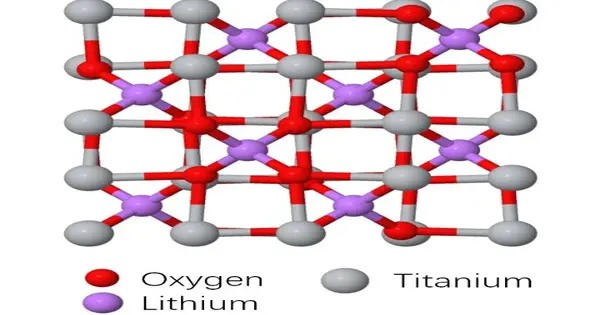
Lithium titanates are chemical compounds of lithium, titanium and oxygen. They are a family of inorganic compounds containing lithium (Li), titanium (Ti), and oxygen (O). They are best known for their role in advanced battery technology but also appear in ceramics, coatings, and electrochemical devices. The most important member is lithium titanate (Li₄Ti₅O₁₂), often abbreviated LTO.
Lithium titanates are a versatile class of lithium–titanium oxides, with Li₄Ti₅O₁₂ being the standout material due to its stability, safety, and excellent battery performance. While not suitable for ultra-high-energy devices, they excel in applications requiring durability, safety, and long service life.
They are mixed oxides and belong to the titanates. The most important lithium titanates are:
- lithium titanate spinel, Li4Ti5O12 and the related compounds up to Li7Ti5O12. These titanates are used in lithium-titanate batteries.
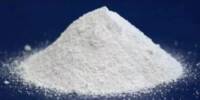
- lithium metatitanate, a compound with the chemical formula Li2TiO3 and a melting point of 1,533 °C (2,791 °F) It is a white powder with possible applications in tritium breeding materials in nuclear fusion applications.
Other lithium titanates, i.e. mixed oxides of the system Li2O–TiO2, are:
- Lithium orthotitanate Li4TiO4, melting point of 1,200 °C (2,190 °F)
- Ramsdellite lithium titanate Li2Ti3O7 and LixTiO2 (0 ≦ x ≦ 0.57) with ramsdellite structure.
Properties
- Chemical formula: Li2TiO3
- Molar mass: 109.76
- Appearance: White powder
- Density: 3.43 g/cm3
- Melting point: 1,533 °C (2,791 °F; 1,806 K)
Occurrences
Lithium titanates do not occur naturally as minerals in significant quantities. They are synthetic materials, produced for advanced technological applications.
Synthesis Routes
- Solid-state reaction: Li₂CO₃ + TiO₂ heated at high temperatures.
- Sol–gel method: Offers better homogeneity and smaller particle sizes.
- Hydrothermal processes: Used for nanoscale titanate structures.
- Spray pyrolysis and combustion synthesis: For battery-grade LTO powders.
Applications
While not strictly part of occurrences, these provide context for their relevance:
1. Lithium-Ion Batteries
Lithium titanate (LTO) is anode material in safe, long-life batteries for:
- Electric buses
- Grid storage
- UPS systems
- Solar power banks
2. Fusion Nuclear Reactors
Li₂TiO₃ is a key material for tritium breeding blankets in ITER and future fusion reactors.
3. Ceramics and Catalysts
Used in high-strength ceramics, dielectric components, and catalytic supports.