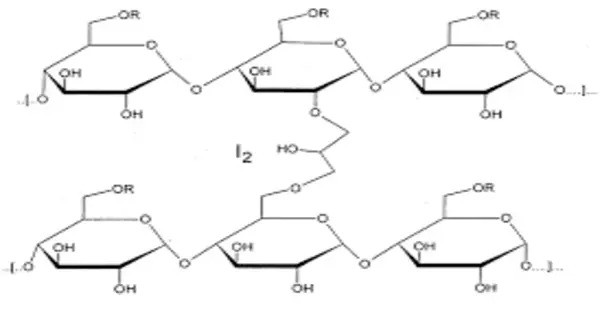
Cadexomer iodine is a topical antimicrobial agent used primarily in wound care. It is an iodophor that is produced by the reaction of dextrin with epichlorhydrin coupled with ion-exchange groups and iodine. It is a water-soluble modified starch polymer containing 0.9% iodine, calculated on a weight-weight basis, within a helical matrix.
It consists of iodine dispersed within a hydrophilic starch-based polymer known as cadexomer. This unique formulation slowly releases iodine over time, providing sustained antimicrobial action while reducing cytotoxicity. The iodine component helps eliminate a wide range of bacteria, fungi, and protozoa, making it effective against infections in chronic wounds such as leg ulcers, pressure ulcers, and diabetic foot ulcers.
When applied, cadexomer iodine absorbs wound exudate, forming a gel that maintains a moist healing environment, promotes autolytic debridement, and reduces odor. The controlled release of iodine continues until the beads become saturated with fluid, at which point the dressing should be replaced.
Properties
Cadexomer iodine is available in various forms, including ointments, creams, and dressings. It is typically brown in color, which fades as iodine is depleted. While effective, it should be used with caution in patients with thyroid disorders, iodine sensitivity, or large wounds due to potential systemic iodine absorption. Overall, cadexomer iodine combines absorption and sustained antimicrobial activity, making it an essential tool for managing infected or exuding wounds and promoting efficient wound healing.
When formulated as a topical wound dressing, Iodosorb adsorbs exudate and particulate matter from the surface of granulating wounds and, as the dressing becomes moist, iodine is released. The product thus has the dual effect of cleansing the wound and exerting a bactericidal action. The bactericidal mechanism of cadexomer iodine is effective against methicillin-resistant Staphylococcus aureus (MRSA) and may prevent MRSA proliferation in the wound bed. This is especially significant because bacteria populations have shown no sign of developing a resistance to iodine since it was first used for wound treatment in the middle of the 19th century.
Occurrences
Cadexomer iodine does not occur naturally; it is a synthetic pharmaceutical formulation developed for medical use. It is primarily found in topical wound care products such as ointments, gels, and dressings. These are used in the management of chronic wounds, ulcers, burns, and infected surgical sites, helping reduce infection and promote tissue regeneration.
It appears as a brown, odorless, free-flowing powder or gel that slowly releases iodine when in contact with wound exudate. The compound is known for its antimicrobial, absorbent, and debriding properties. It works by absorbing excess fluid, pus, and debris from wounds while maintaining a moist environment conducive to healing. The gradual release of iodine ensures sustained antibacterial activity without cytotoxic effects.
Uses
In addition to other manufacturers, Smith & Nephew distributes cadexomer iodine as Iodosorb and Iodoflex in many countries of the world for the treatment and healing of various types of wounds. The dosage forms are a paste dressing, an ointment and a gel, all of which contain 0.9% iodine. It is available in India under brand name Cadomer and is sold by JB Chemicals.