Companies Law Companies Law is the field of law legislation under which the formation, registration or incorporation, governance, and dissolution of a firm is administered and controlled.…
Post Creole Continuum Post Creole Continuum represents the range of dialectal variations found in many creole-speaking communities. It also known as the creole continuum. It was coined by…
Moral Responsibility Moral Responsibility refers to the duty that individuals and groups have to act in accordance with the moral principles that are important to their social…
Eudaimonia Eudaimonia is a term of classical Greek word, which is commonly translated as “happiness”, but perhaps better described as “well-being” or “human flourishing” or “good…
Deconstruction Deconstruction is a philosophical theory, which used in the study of literature or philosophy. It says that a piece of writing does not have just…
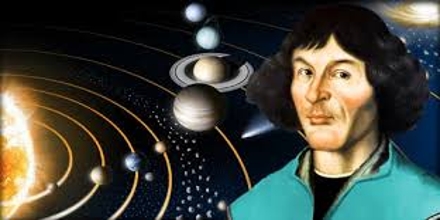
Nicolaus Copernicus: Ancient Astronomer Principle purpose of this lecture is to present on Nicolaus Copernicus: Ancient Astronomer. He was a Renaissance mathematician and astronomer who formulated a model of the universe…
Philosophical Analysis Philosophical Analysis is a general term for techniques, which typically used by philosophers. It differ from the results of scientific investigation in being conceptual analyses.…
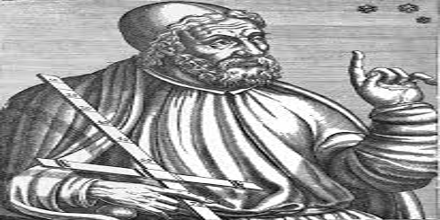
Ptolemy: Ancient Astronomer Major purpose of this lecture is to present on Ptolemy: Ancient Astronomer. Ptolemy was an influential mathematician, astronomer, astrologer, geographer and also a poet. He was a…
Greek Astronomy Philosophers: Aristarchus Aristarchus was first to measure the distance to the sun and moon. Aristarchus of Samos was an ancient Greek astronomer and mathematician who presented the first known model that placed the Sun at…
Greek Astronomy Philosopher: Galileo The aim of this lecture is to present on Greek Astronomy Philosopher: Galileo. Italian scientist and scholar Galileo made pioneering observations that laid the foundation for modern…
Greek Astronomy Philosophers: Copernicus Copernicus expanded the ideas of Aristarchus and identified the positions of the planets. Copernicus was born and died in Royal Prussia, a region that had been a…
Greek Astronomy Philosophers: Ptolemy Prime objective of this lecture is to present on Greek Astronomy Philosophers: Ptolemy. Ptolemy was a Greco-Egyptian writer, known as a mathematician, astronomer, geographer, astrologer, and poet…